Share this Article
Announcing RLS 2026’s #1 State: Arkansas
July 13, 2026
Share this Article
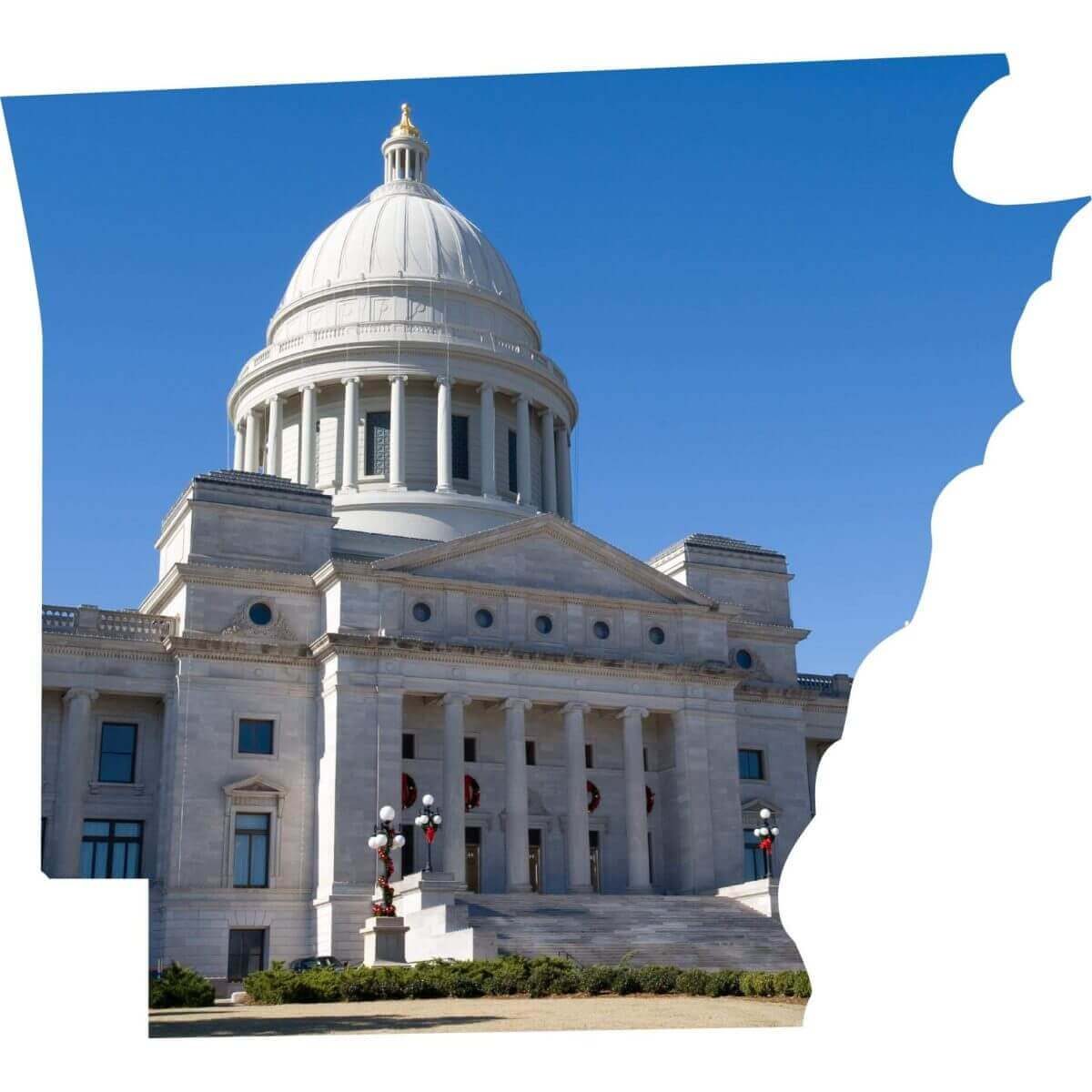
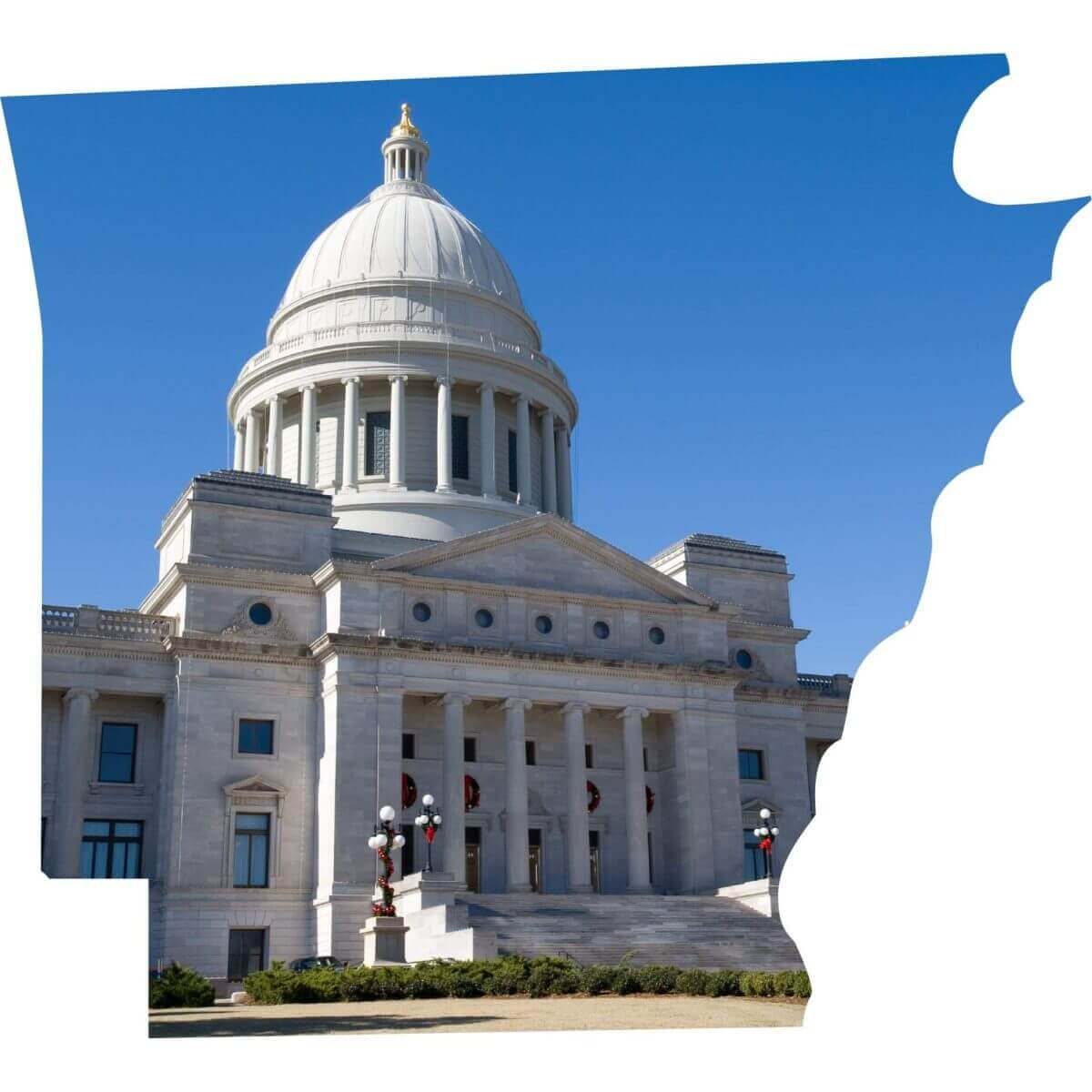
Arkansas has claimed first place in the 2026 edition of the Religious Liberty in the States (RLS) index. After ranking sixth in 2025, the Natural State surged to the top this year, overtaking Florida, which dropped to third place.
Arkansas now protects 89 percent of the religious liberty safeguards tracked in the 2026 RLS index. This remarkable achievement reflects the state’s substantial commitment to protecting religious freedom through a wide array of legal safeguards. Arkansas’s statutory framework helps ensure that individuals can live according to their faith in everyday life, including in health care, education, religious practice, family life, and the workplace.
Arkansas’s score is 63 percentage points higher than that of the lowest-ranked state, New York, which protects just 26 percent of the safeguards measured in RLS 2026. Even among the states with the strongest religious liberty protections, Arkansas leads by a clear margin. Its score surpasses second-place Tennessee by four percentage points and third-place Florida by 12 percentage points.
Leading with New Protections
Arkansas’s rise to first place is due in large part to legislation adopted in 2025. The state enacted HB 1615, a law that protects individuals and institutions from being forced to participate in wedding ceremonies to which they have religious objections.
What makes HB 1615 especially significant is that it extends these protections to private businesses such as florists, bakers, photographers, and other wedding vendors with sincerely held religious beliefs. Previously, Mississippi was the only state to offer this kind of protection to for-profit businesses. By adopting HB 1615, Arkansas became just the second state to protect private businesses from being forced to participate in wedding ceremonies that conflict with the religious convictions of their owners or employees.
This safeguard matters because disputes over wedding participation have led to years of litigation in other states. For example, Aaron and Melissa Klein, owners of Sweet Cakes by Melissa, declined in 2013 to design and create a custom cake for a same-sex wedding because of their Christian convictions. The State of Oregon punished them with a $135,000 penalty and issued a gag order against them. First Liberty represents the Kleins in this case that is still ongoing more than a decade later. A law like Arkansas’s would protect individuals and businesses from this kind of litigation.
Arkansas’s success shows how quickly a state can improve its religious liberty protections through clear legislative action. Legislators in the 48 states without this protection should consider bills modeled on Arkansas’s statute to improve their state’s ranking.
An Excellent Rating
RLS 2026 also introduces a notable milestone. For the first time, two states have earned an “excellent” rating for protecting religious liberty. Arkansas leads the nation with 89 percent of the possible protections, followed by Tennessee with 85 percent.
Last year, no state had adopted more than 80 percent of the laws considered in the index. This year, Arkansas and Tennessee both crossed that threshold, demonstrating that states can do more than lead the rankings. They can also achieve a higher absolute score by adopting broad and meaningful legal protections.
What’s New in RLS 2026
The RLS project considered 29 protections in 2022, 34 protections in 2023, 39 protections in 2024, and 47 protections in 2025. This year, RLS added three more items, bringing the index to 50 legal protections grouped into 20 safeguards.
The new items added in RLS 2026 include medical conscience protections that permit individuals to decline to participate in genetic counseling, protections allowing individuals to opt out of joining labor unions because of religious objections, and protections against discrimination at public institutions of higher education because of religious commitments.
Arkansas receives credit for all three newly tracked protections, helping push the state to the top of the 2026 rankings and contributing to its “excellent” rating. As the index continues to develop, states that actively adopt new protections can move up, while states that remain inactive may fall behind.
Arkansas’s Future
Despite Arkansas’s impressive performance, every state has room for improvement. Even Arkansas is missing seven of the specific protections RLS considers, a gap that could be remedied with just a few well-written statutes.
If Arkansas wants to maintain its lead, it should consider adding these and other protections. But the state’s first-place finish shows that meaningful progress is possible when policymakers identify gaps in the law and act to protect the ability of all citizens to live according to their faith.
Every state has the opportunity to strengthen its legal protections for religious liberty. The RLS index makes these opportunities transparent and actionable. Arkansas’s rise to first place should encourage state-level policymakers and citizens across the country to protect everyone’s ability to live according to their conscience.
Want to see where your state ranks? Check out the RLS index state ranking or access the report to learn more.