Share this Article
How RLS Expanded in the Fifth Edition
July 13, 2026
Share this Article
The Religious Liberty in the States (RLS) index is designed to measure how well each state protects religious liberty through law. Since its launch in 2022, RLS has expanded each year to reflect additional areas where states can protect the free exercise of religion.
In its fifth edition, RLS now measures 50 legal protections across 20 safeguards. This expanded index gives citizens, legislators, and researchers a clearer picture of where states excel, where they fall short, and how they can continue strengthening protections for people of all faiths.
Items and Safeguards
RLS tracks religious liberty protections through specific legal “items” and broader “safeguards.” Items are individual protections found in state law. Safeguards are broader categories that group related items together.
For example, RLS considers whether states protect healthcare workers from being forced to participate in medical procedures that violate their religious convictions. It also considers whether states protect religious organizations, students, families, public officials, and private citizens from unnecessary government interference or discrimination.
Together, these items and safeguards help show how religious liberty is protected in everyday life, including in health care, education, religious practice, family life, and the workplace.
The original RLS 2022 edition covered 29 items within 11 safeguards. In 2023, RLS expanded to 34 items and 14 safeguards. In 2024, the index grew to 39 items and 16 safeguards. In 2025, RLS included 47 items across 20 safeguards. This year, RLS added three more items, bringing the total to 50 legal protections across the same 20 safeguards.
Learn more about the safeguards here.
What Changed in RLS 2026
The three new items added in RLS 2026 address religious liberty in health care, economic life, and higher education:
- Medical conscience protections that allow individuals to decline participation in genetic counseling because of religious objections
- Protections allowing workers to opt out of joining labor unions because of religious objections
- Equal access protections for people at public institutions of higher education because of their religious commitments
These additions reflect the ongoing purpose of RLS: to measure how states protect religious liberty not only in houses of worship, but also in the many areas of life where citizens may need to act according to conscience.
How Expansion Affects State Scores
Because RLS is a dynamic index, state scores can change from year to year for several reasons. A state may improve because it passes new legislation. A state may also improve because it already has a legal protection in place when RLS begins tracking that item. Conversely, states that remain inactive may fall in the rankings as other states adopt new protections or as the index expands.
Year-to-year comparisons should be read carefully, because a lower ranking does not always mean a state has lost religious liberty protections. It may mean that other states have moved ahead by adopting new safeguards. It may also mean that the index now measures protections that the state has not yet adopted.
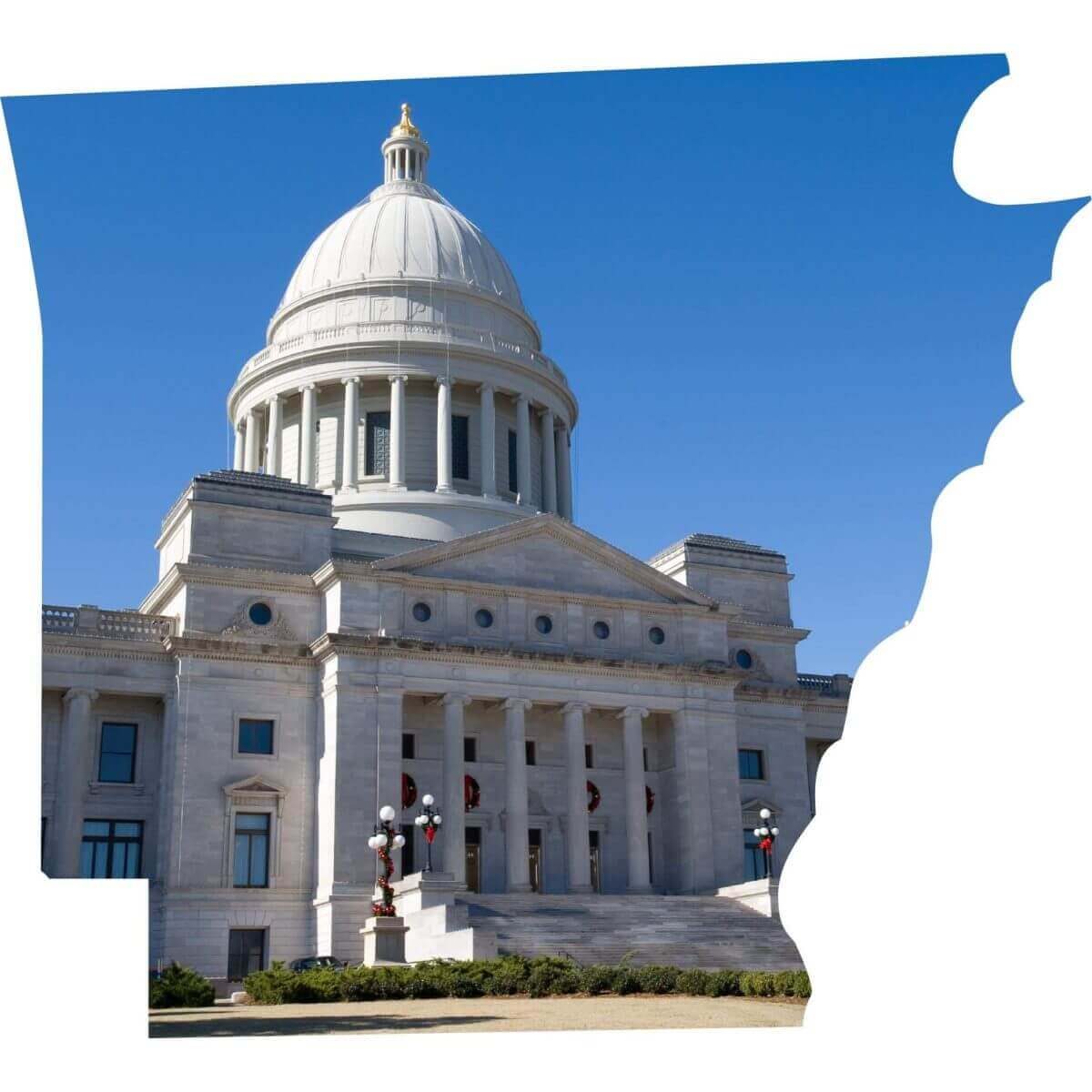
This year, Arkansas and Tennessee rank first and second, with scores of 89 percent and 85 percent respectively. Both states earned an “excellent” rating, meaning that they scored above 80 percent, marking the first time any state has crossed that threshold in RLS. Arkansas rose after adopting a law which protects a wide range of individuals and institutions from being forced to participate in wedding ceremonies to which they have religious objections. Tennessee rose after adopting a strong general medical conscience protection.
Other states also improved because of recent legislative action. Idaho advanced after passing a general conscience law. Georgia and Wyoming deserve praise for adopting Religious Freedom Restoration Acts in 2025. These examples show that states can make meaningful progress when lawmakers identify gaps in religious liberty protections at the state level and act to address them.
What the 2026 Results Show
The expanded index also shows how much room remains for improvement. Even as leading states have strengthened their protections, 34 states are doing less than half of what they could be doing to protect religious liberty. Half of the states have adopted less than 40 percent of the safeguards measured by the index. New York returned to last place for the first time since 2022, largely because it has remained stagnant while other states have acted.
At the same time, RLS shows that progress is possible. Since 2022, states such as Montana, South Carolina, Tennessee, Arkansas, and Idaho have passed significant laws to better protect religious liberty. Over that same period, Tennessee, South Carolina, and Montana have shown the greatest improvement.
How to Compare Scores Across Years
As RLS continues to expand, readers should avoid treating every year-to-year comparison as a simple apples-to-apples measure. A state’s score may change because it passed new legislation, because newly tracked protections were already in place, because other states moved ahead, or because the index has been refined. Any errors that are discovered in previous versions of the index are documented and published here.
As new questions arise in state law and public life, religious liberty protections will continue to develop, and RLS will continue to grow. The study is designed to reflect how well states protect religious liberty today while also giving citizens and legislators clear examples of how their states can improve.
The fifth edition of RLS offers the most comprehensive picture yet of religious liberty protections across the states. It also reinforces one of the central lessons of the project—every state has room to improve.
Compare state scores across the years or download the full RLS 2026 report to learn more.